Space Tech|Issue 04
The Architecture of Dust: Advancements in Lunar 3D Printing
New techniques for additive manufacturing using lunar regolith composites promise a future of self-sufficient off-world construction, shifting the paradigm of space habitation from pre-fab modules to bespoke structures.
- By
- ARTEMIS TOKYO Editors
- Dateline
- Tucson, Arizona
- Date
- November 16, 2026
- Time
- 4 min read
Source
Space.com
Beyond Earth's gravitational pull, the fundamental challenge of building has always been the immense cost and logistical complexity of transporting materials. Every kilogram launched from Earth carries a prohibitive price tag, forcing off-world habitats to be compact and utilitarian.
Recent research from the Lunar Systems Lab in Tucson, Arizona, however, offers a compelling alternative. Scientists there have demonstrated a novel 3D printing method for lunar regolith composites, achieving significant structural integrity with locally sourced materials.
The new technique employs a laser sintering process to fuse simulated lunar dust with a polymer binder, creating robust building blocks. Prototypes have shown a tensile strength approximately 1.5 times greater than previous regolith-based printing methods, enabling the fabrication of larger, more complex load-bearing structures suitable for habitation modules and radiation shielding.
This advancement drastically reduces reliance on Earth-launched components. For context, transporting a single kilogram of material to the lunar surface can cost upwards of $1 million, making in-situ resource utilization (ISRU) a cornerstone of sustainable lunar settlement. The ability to print structures on-site using readily available regolith could dramatically lower the barrier to establishing permanent outposts.
The ability to print structures with locally sourced materials marks a pivotal shift.
The Lunar Systems Lab projects a full-scale lunar demonstration mission by 2030, where an autonomous printer will construct a test habitat module. This initial phase aims to validate the structural performance and operational reliability of the system in the lunar environment.
For those who will eventually reside on the Moon, this technology means more than just cost savings. It opens the door to a new architectural vernacular, where the unique texture and composition of lunar dust dictate a distinct aesthetic. Future lunar dwellings might boast walls with a subtle, granular finish, or curved structures that organically merge with the lunar topography, moving beyond the sterile uniformity of early pre-fabricated modules. This allows for a sense of place, crafted from the very ground beneath one's feet.
Related Reading

Space Tech
Geopolitical Realities Ascend in the Off-World Sphere
Journalist Tim Marshall offers a stark assessment of national interests shaping the future of space.

Space Tech
Lunar Regolith 3D Printing: Crafting Future Habitats from Moon Dust
New advancements in in-situ resource utilization allow for the 3D printing of structural components using lunar soil, heralding a new era for off-world architecture and sustainable habitation.
Space Tech
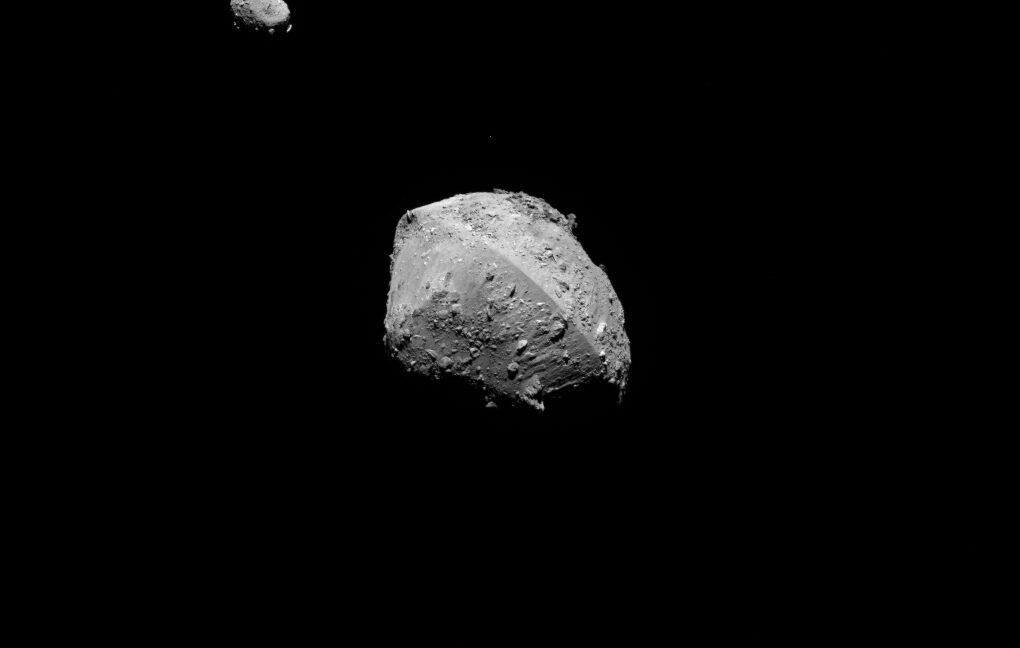
Hera Reveals Asteroid's Post-Impact Transformation
The European Space Agency's Hera mission has arrived at Dimorphos, observing the profound changes wrought by NASA's DART impact. The findings offer critical data for planetary defense strategies.