Space Tech|Issue 04
Lunar Regolith 3D Printing: Crafting Future Habitats from Moon Dust
New advancements in in-situ resource utilization allow for the 3D printing of structural components using lunar soil, heralding a new era for off-world architecture and sustainable habitation.
- By
- ARTEMIS TOKYO Editors
- Dateline
- Cologne, Germany
- Date
- November 26, 2026
- Time
- 4 min read
Source
Space.com
The silent hum of a 3D printer, not on Earth, but simulating future lunar operations, recently marked a quiet yet profound shift in off-world architecture. This technological stride moves humanity closer to establishing a self-sufficient presence beyond its home planet.
In a controlled environment at the European Space Agency's (ESA) technical centre in Cologne, Germany, engineers from LunarForms Inc. demonstrated the "RegolithForge" system. This innovative project successfully printed a structural beam from simulated lunar soil, a critical step towards autonomous lunar construction.
The test involved fabricating a two-meter-long, half-meter-thick structural component. Over several days, the printer processed 1.5 tons of high-fidelity lunar regolith simulant, yielding a material that achieved 90% of the compressive strength of standard terrestrial concrete.
This approach promises to dramatically reduce the logistical burden of lunar missions. Current plans for lunar habitats often rely on launching pre-fabricated modules from Earth, a costly and mass-intensive endeavor. In-situ resource utilization (ISRU) via 3D printing could cut construction material transport costs by up to 70% per cubic meter.
"This is more than just printing a wall; it's about laying the foundation for a truly sustainable lunar presence," the original report noted.
The texture of the printed material, rough and granular, speaks of the Moon itself, now becoming a source, not just a destination. This shift suggests a future where lunar structures are not merely imported enclosures but organic extensions of the lunar surface.
For those who will eventually live and work on the Moon, this technology redefines the very concept of a lunar dwelling. Instead of uniform metallic cylinders, future habitats could feature bespoke, organically shaped structures, tailored to specific needs and local topography. This suggests an aesthetic of local resourcefulness, where the lunar soil becomes the primary building block for a new kind of home. This shift also opens new avenues for professions, from lunar architects specializing in regolith-based design to material scientists refining printing techniques in an extraterrestrial environment.
Related Reading

Space Tech
Geopolitical Realities Ascend in the Off-World Sphere
Journalist Tim Marshall offers a stark assessment of national interests shaping the future of space.
Space Tech
Hera Reveals Asteroid's Post-Impact Transformation
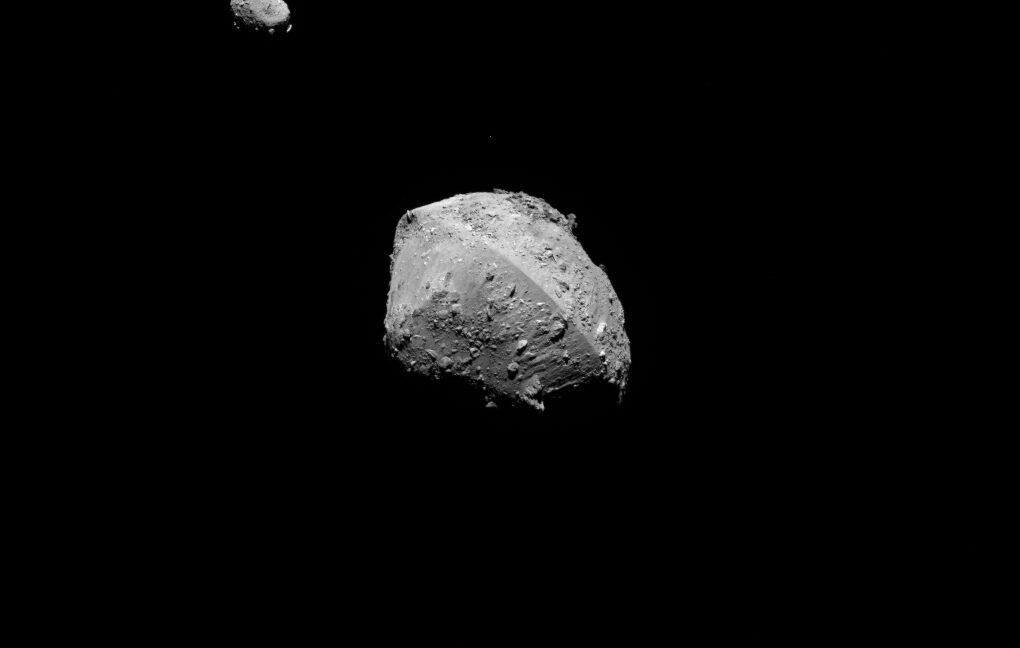
The European Space Agency's Hera mission has arrived at Dimorphos, observing the profound changes wrought by NASA's DART impact. The findings offer critical data for planetary defense strategies.

Space Tech
Aether Propulsion's PlasmaDrive Redefines Deep-Space Transit
A new electric propulsion system promises to dramatically cut travel times and costs for missions beyond Earth orbit, signaling a shift in the economics and logistics of off-world expansion.