Space Tech|Issue 04
Software Glitches Reach Mercury Orbit
A distant spacecraft orbiting Mercury reportedly suffered a software outage, drawing parallels to recent terrestrial system failures and underscoring the fragility of complex digital infrastructure in extreme environments.
- By
- ARTEMIS TOKYO Editors
- Dateline
- November 24, 2026
- Date
- November 24, 2026
- Time
- 4 min read
Source
Futurism
Not all failures occur within Earth's atmosphere. A recent report details a software outage on a distant spacecraft operating near Mercury, interrupting its mission objectives.
The incident, reported on November 24, 2026, highlights the pervasive challenge of digital system reliability. While specific mission details remain unconfirmed, the event underscores that even highly specialized, deep-space probes are susceptible to the same vulnerabilities as terrestrial networks.
The original report drew a direct comparison to recent bank outages on Earth, suggesting a universal fragility across complex software architectures. This parallel between a financial institution's network and a probe millions of kilometers away is stark.
Operating a spacecraft at such distances, roughly 77 million kilometers from Earth at its closest approach, requires immense precision and robust autonomy. A software glitch can mean not just a temporary inconvenience but a significant setback for scientific data collection and mission longevity, given the light-speed delay in communication.
"Distant Spacecraft Near Mercury Hit by Outage Like All Those Banks the Other Week"
Engineers design these systems with layers of redundancy and fault tolerance. Yet, the sheer complexity of modern space software, often comprising millions of lines of code, introduces unforeseen failure points. The environment itself — extreme radiation, temperature fluctuations — can also exacerbate latent software bugs.
The Future of Off-World Operations
For future off-world settlements and long-duration missions, such outages present a critical challenge. Reliable habitat systems, life support, communication relays, and resource extraction machinery will all depend on flawless software. A minor bug on Earth might inconvenience a few; in space, it could threaten lives or the viability of an entire outpost. The need for self-healing code, AI-driven diagnostics, and remote patching capabilities becomes paramount. Resilience will be less about physical shielding and more about digital integrity.
Related Reading

Space Tech
Geopolitical Realities Ascend in the Off-World Sphere
Journalist Tim Marshall offers a stark assessment of national interests shaping the future of space.

Space Tech
Lunar Regolith 3D Printing: Crafting Future Habitats from Moon Dust
New advancements in in-situ resource utilization allow for the 3D printing of structural components using lunar soil, heralding a new era for off-world architecture and sustainable habitation.
Space Tech
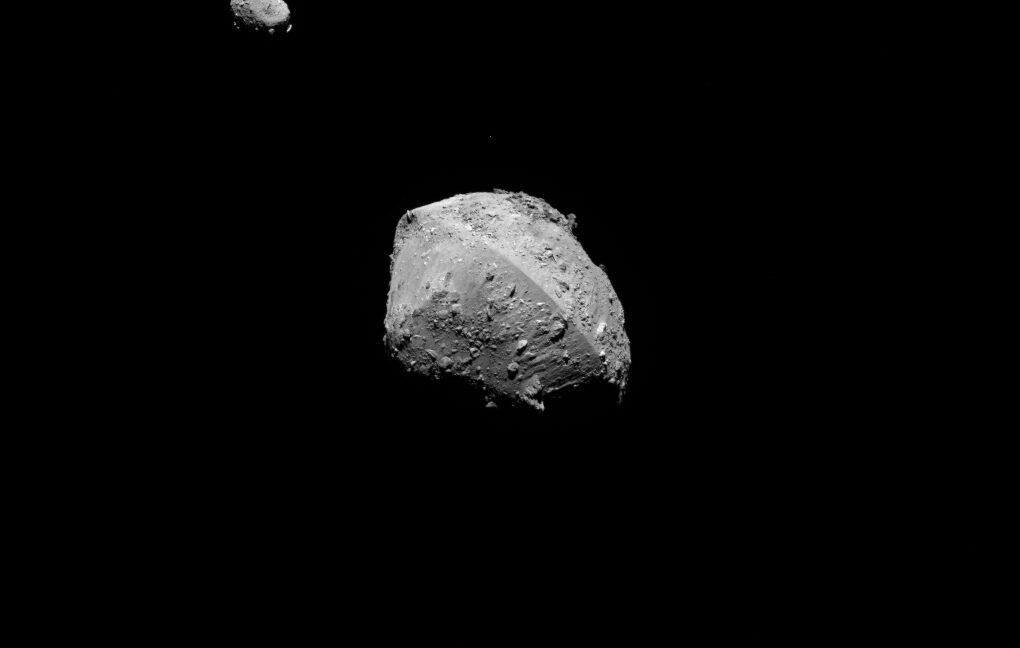
Hera Reveals Asteroid's Post-Impact Transformation
The European Space Agency's Hera mission has arrived at Dimorphos, observing the profound changes wrought by NASA's DART impact. The findings offer critical data for planetary defense strategies.