Space Tech|Issue 04
OrbitPath Dynamics Unlocks New Era of Intra-Orbital Logistics
A new reusable orbital transfer vehicle promises to reshape the economics of space infrastructure, making modular off-world habitats a nearer reality.
- By
- ARTEMIS TOKYO Editors
- Dateline
- Tokyo, 2026-11-17
- Date
- November 17, 2026
- Time
- 5 min read
Source
Space.com
OrbitPath Dynamics has successfully completed the maiden flight of its Pathfinder-1 orbital transfer vehicle, marking a significant step towards more efficient space logistics. The autonomous vehicle demonstrated its capability by transferring a 5-ton habitat module component from low Earth orbit (LEO) to a geostationary transfer orbit (GTO) with unprecedented precision and fuel economy.
The Pathfinder-1 employs an advanced electric propulsion system, allowing for extended operational periods and multiple reuses. This design philosophy dramatically reduces the cost per kilogram for moving payloads between different orbital altitudes, a critical bottleneck in the expansion of human presence beyond Earth.
Previously, such transfers often required dedicated launch vehicles or less efficient chemical propulsion stages, limiting the size and frequency of inter-orbital movements. The Pathfinder-1's reusability and efficiency represent a notable departure from these conventional methods.
This shift in orbital mechanics carries profound implications for the assembly of large-scale space infrastructure. Future space stations, lunar gateway components, and even asteroid mining outposts can now be constructed with greater flexibility and at a lower financial overhead.
"The ability to move significant mass within orbit cheaply and repeatedly is a game-changer for off-world construction and living."
For those who will live, work, and build off-world, this means a fundamental change in architectural possibilities. Instead of monolithic, pre-fabricated structures, future habitats can be truly modular, assembled and expanded incrementally. The ease of swapping out components or adding new living quarters transforms orbital settlement from a fixed structure into an adaptable, evolving environment, much like a terrestrial city grows and changes over time.
Related Reading

Space Tech
Geopolitical Realities Ascend in the Off-World Sphere
Journalist Tim Marshall offers a stark assessment of national interests shaping the future of space.

Space Tech
Lunar Regolith 3D Printing: Crafting Future Habitats from Moon Dust
New advancements in in-situ resource utilization allow for the 3D printing of structural components using lunar soil, heralding a new era for off-world architecture and sustainable habitation.
Space Tech
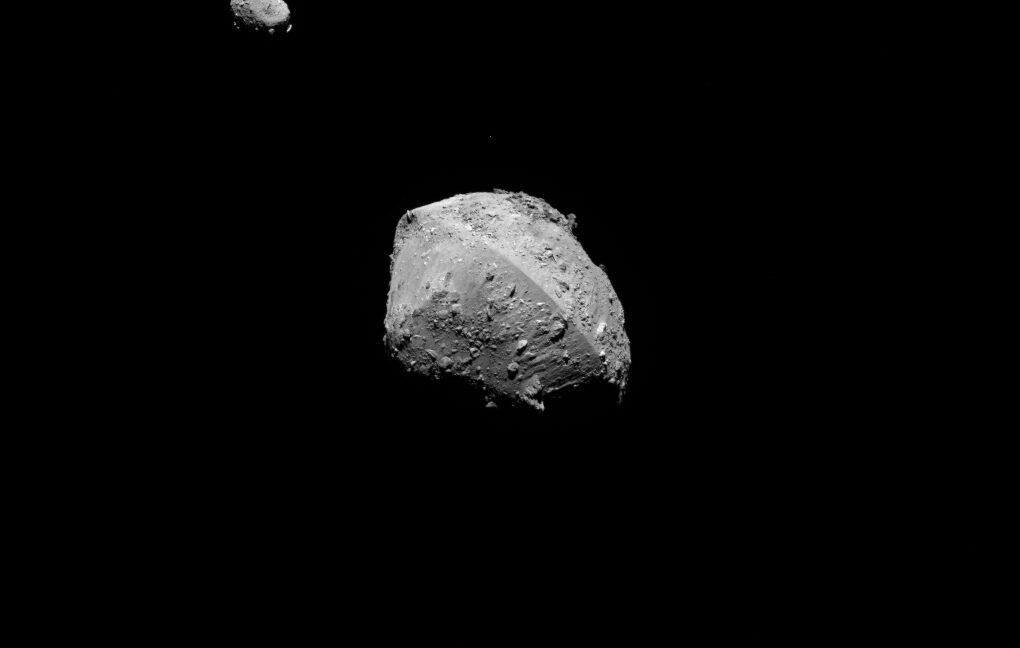
Hera Reveals Asteroid's Post-Impact Transformation
The European Space Agency's Hera mission has arrived at Dimorphos, observing the profound changes wrought by NASA's DART impact. The findings offer critical data for planetary defense strategies.