Space Tech|Issue 04
Anduril's Dark Watch: Illuminating Orbital Night
A new satellite from Anduril promises unprecedented visibility in the shadowed expanses of Earth orbit, challenging the conventions of space domain awareness.
- By
- ARTEMIS TOKYO Editors
- Dateline
- TOKYO, 2026-11-11
- Date
- November 11, 2026
- Time
- 3 min read
Source
Ars Technica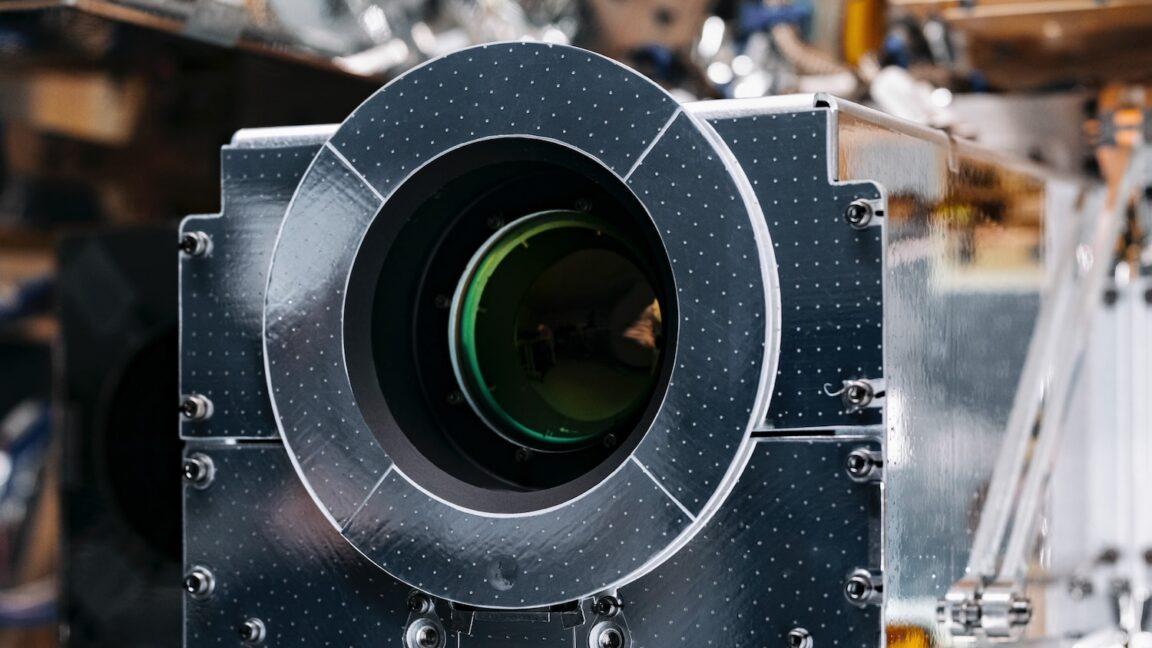
The silent expanse of Earth's orbit, often perceived as a vacuum of light, has long offered cover for clandestine movements. Conventional optical sensors struggle in the absence of sunlight, leaving vast stretches of orbital space unwatched during Earth's nightside passes.
American defense technology firm Anduril has now announced a significant step forward with its inaugural satellite, named "Dark Watch." This spacecraft is specifically engineered to pierce through the orbital darkness, providing persistent surveillance capabilities previously unattainable.
Launched into low Earth orbit, Dark Watch employs advanced thermal imaging and sophisticated sensor fusion techniques. It is designed to detect and track other satellites and objects, regardless of ambient light conditions, by sensing their heat signatures and subtle electromagnetic emissions.
This represents a departure from systems reliant solely on reflected sunlight or active radar. The ability to observe objects as small as a cubic meter, even when they attempt to maneuver covertly, marks a new chapter in space domain awareness.
"The capacity to observe objects in orbital night fundamentally changes the calculus of space operations," the original report noted.
Such enhanced transparency in orbit carries profound implications for future off-world settlements. As human presence extends to lunar outposts and orbital habitats, the need for clear, unambiguous knowledge of nearby traffic becomes paramount. This technology could define new standards for orbital safety and resource management.
For those who will eventually reside and conduct business beyond Earth, the constant, impartial gaze of such satellites could introduce a new layer of accountability. The silent ballet of objects in orbit, once obscured by shadow, now becomes a stage for verifiable action, influencing everything from insurance premiums for orbital infrastructure to the very architecture of secure off-world facilities.
Related Reading

Space Tech
Geopolitical Realities Ascend in the Off-World Sphere
Journalist Tim Marshall offers a stark assessment of national interests shaping the future of space.

Space Tech
Lunar Regolith 3D Printing: Crafting Future Habitats from Moon Dust
New advancements in in-situ resource utilization allow for the 3D printing of structural components using lunar soil, heralding a new era for off-world architecture and sustainable habitation.

Space Tech
Hera Reveals Asteroid's Post-Impact Transformation
The European Space Agency's Hera mission has arrived at Dimorphos, observing the profound changes wrought by NASA's DART impact. The findings offer critical data for planetary defense strategies.